

Two terms hiring teams use interchangeably and why getting them confused slows down every open role
Ask five hiring managers to explain candidate sourcing vs recruiting and you’ll likely get five different answers. Some use the words as synonyms. Others swear they’re entirely separate jobs. At Digifinity, we get asked to clear this up almost every week, usually by a founder who’s just posted a role, watched the applications trickle in, and wondered why none of them fit. According to the Society for Human Resource Management, sourcing is the proactive search for candidates, distinct from the reactive work of reviewing whoever applies. That one distinction explains a lot about why hiring stalls.
For a small business or an early-stage startup, this isn’t just semantics. Knowing which one you’re short on tells you exactly what to fix.
Why do “sourcing” and “recruiting” get used as if they’re the same thing?
Most job titles don’t help. A “recruiter” at a five-person startup might spend their whole day building outreach lists, which is sourcing work, while a “sourcer” at a larger agency might end up screening resumes because there’s nobody else to do it. Roles blur, especially in smaller teams where one person wears both hats out of necessity rather than design.
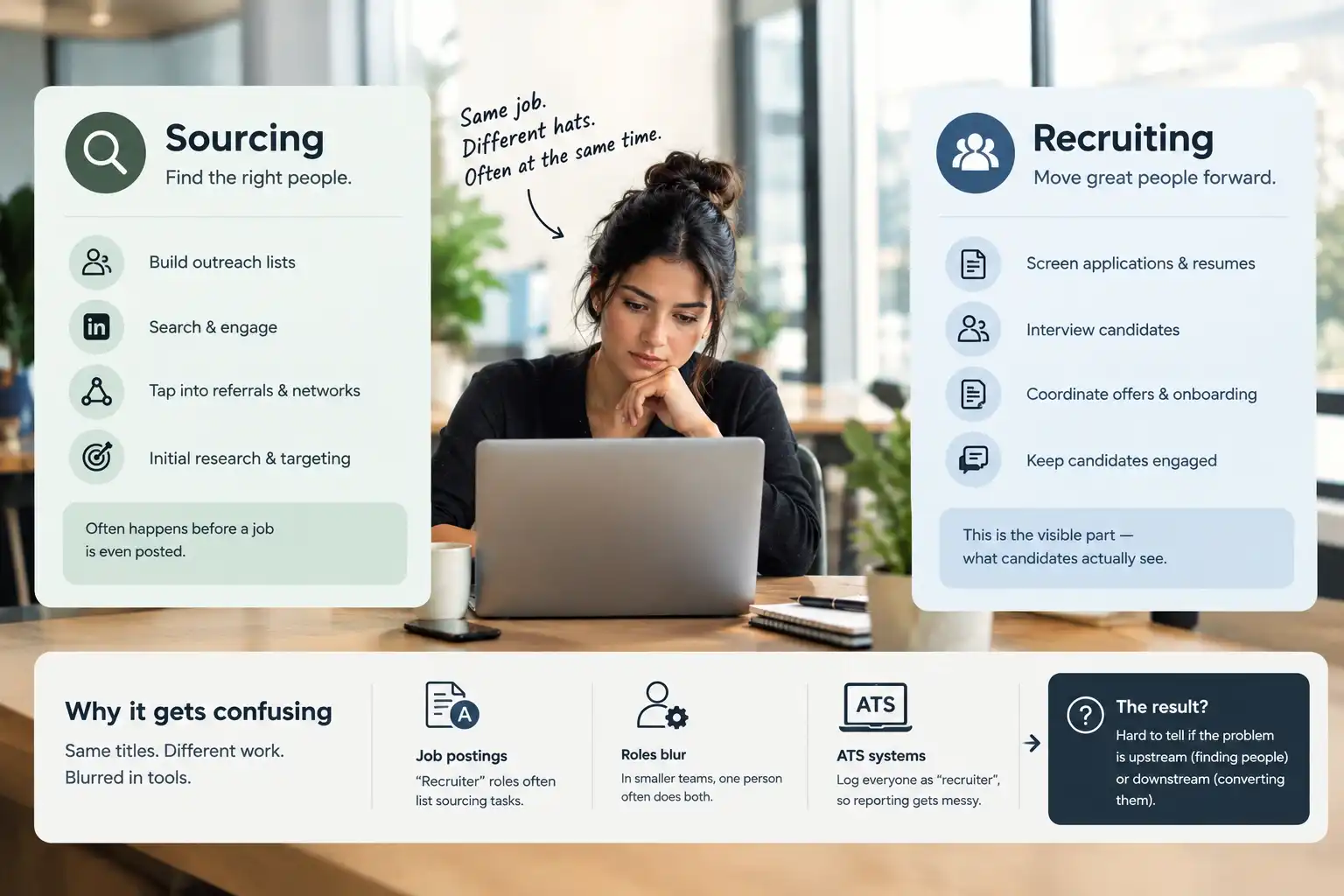
The confusion also comes from timing. Sourcing happens quietly, often before a role is even posted. Recruiting is the visible part of interviews, offers, the back-and-forth candidates actually notice. It’s easy to assume the visible part is the whole process, when really it’s the second half of a two-part job.
Job postings don’t help either. A listing for “Recruiter” at a growing startup will often ask for boolean search skills, LinkedIn Recruiter experience, and cold outreach all sourcing tasks buried under a title that implies the job is purely evaluative. Applicant tracking systems compound the problem. Most ATS platforms log everyone under a single “recruiter” role regardless of what they actually spend their day doing, so even internal reporting blurs the line between the two functions. By the time a business tries to diagnose why hiring feels slow, nobody can say with confidence whether the gap is upstream, in finding people, or downstream, in converting them.
Not sure if you need sourcing, recruiting, or both?
Tell us about the role you’re struggling to fill. We’ll tell you honestly which half of the process is the actual bottleneck, and what fixing it involves.
What candidate sourcing actually covers?
Sourcing is the outbound side of hiring. A sourcer isn’t sitting around waiting for applications. They’re building a list of people who fit a role, whether those people are job-hunting or not: searching LinkedIn and niche technical communities, digging back through an old applicant tracking system for someone who was a near-miss six months ago, sending the message that actually starts a conversation.
Here’s why that matters. Most people worth hiring aren’t applying to anything. Depending on the source, somewhere around seventy percent of the workforce counts as passive talent: people not actively job-hunting but open to the right offer if it lands in their inbox. A process built only to catch applicants is fishing in less than a third of the available pool.
A sourcer’s job isn’t to produce a hire. It’s to hand a recruiter a shortlist of people who are both qualified and actually interested.
Most of this work is judgement calls, not process. Take a niche engineering search: a sourcer might spend an afternoon just narrowing a boolean string on LinkedIn or GitHub, filtering for the exact tools and years of experience a role calls for. Then comes the slower part checking who’s recently switched jobs, who’s posting in the right communities, who seems like they’d actually reply. That first message decides everything. Send “we have an opening, interested?” and most people won’t bother. Mention something specific about their background instead, and the odds flip. This is the whole point of strategic sourcing over ad hoc outreach: building the talent pool before the role even opens, so there’s already somewhere to go the moment a hiring manager says yes.
What recruiting actually covers?
Recruiting picks up where sourcing leaves off. Resumes get screened, interviews get run, hiring managers get looped in on every decision, offers get negotiated, and eventually someone signs. But the job isn’t really about ticking those steps off in order. A recruiter’s real value is judgement: reading between the lines of a CV that’s technically accurate but quietly overselling, working out whether someone’s stated experience actually holds up against what the role needs, and keeping a strong candidate engaged so they don’t quietly accept a competing offer three weeks into your process.
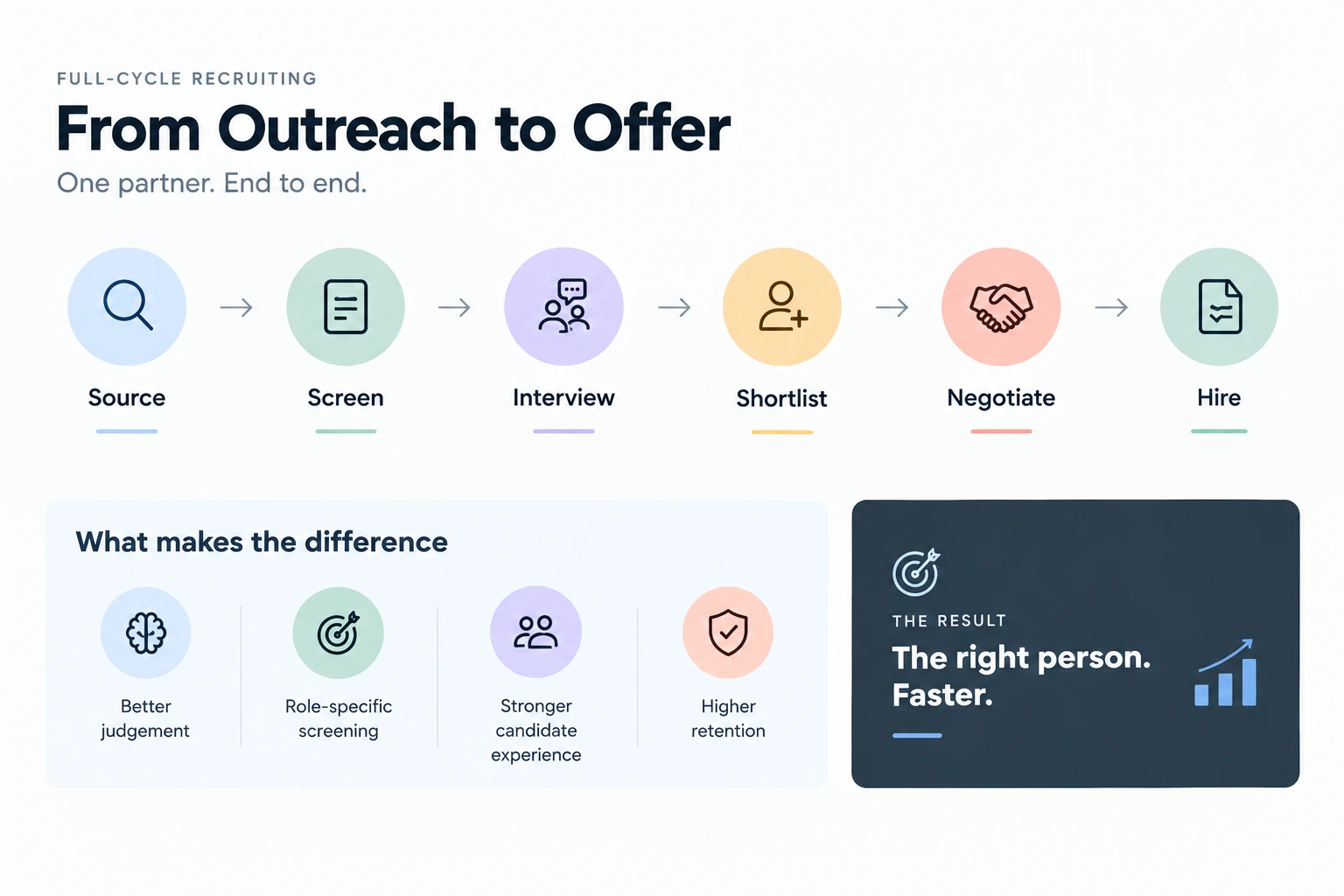
This is also where full-cycle recruiting comes in. Some businesses want one person or one partner to own the entire hiring journey rather than splitting sourcing and recruiting between different teams. Digifinity’s full cycle recruiting service is built for exactly that: a single point of accountability from the first outreach message to the signed offer.
Honestly, most hiring mistakes trace back to screening, not the interview itself. Picture a recruiter with a job title and maybe two lines of description trying to fill a “Senior Marketing Manager” role. Nine times out of ten they end up doing exactly what you’d expect: skimming resumes for that phrase, or something close enough, and pushing anyone through who says the right words. It feels like an evaluation. It isn’t. It’s just matching text, and plenty of people who’ve held that title never actually did the work behind it.
Now think about a recruiter who did the boring part first, sitting down with whoever’s hiring and actually pinning down what the role needs. Not a vague wishlist, three or four things that genuinely can’t be skipped, a couple of nice-to-haves, and something real when it comes to “team fit” instead of the usual shrug everyone gives that question. Once that exists, the interview stops being five recycled questions pulled from a template. The recruiter’s actually probing for the specific stuff that matters for this job, this team.
It doesn’t look like much from the outside. Same job title either way, same-looking process on paper. But that’s the gap between hiring someone who quietly coasts for a year and someone who’s genuinely right for the seat.
Sourcing vs recruiting, side by side:
| Sourcing | Recruiting | |
| Primary focus | Finding and engaging candidates | Evaluating and hiring candidates |
| Direction | Outbound, proactive | Inbound and process-driven |
| Typical activities | Boolean search, LinkedIn outreach, talent mapping | Screening, interviewing, offer negotiation |
| Success metric | Qualified candidates in pipeline, response rate | Time-to-fill, offer-acceptance rate |
| Best suited to | Passive, hard-to-find, or niche talent | Managing an active candidate pipeline through to hire |
These two jobs also suit genuinely different personalities, and it’s worth saying outright. Sourcing rewards a kind of obsessive patience: a good sourcer is perfectly happy losing an hour to narrowing a single search string before they’ve sent anyone a message. Recruiting asks for a different skill entirely, one that’s less about research and more about holding a relationship together under pressure, keeping a candidate feeling looked-after through five weeks of interviews without letting them go cold. Very few people are naturally strong at both. That’s usually the real reason hiring teams eventually split sourcing and recruiting into separate roles once they’ve got the headcount to do it. It’s not about workload. It’s about the fact that the two jobs barely resemble each other once you look past the shared title.
Why does the distinction matter more for small teams than large ones?
A large enterprise can afford separate sourcing and recruiting functions, each with their own headcount and their own metrics. A ten-person startup usually can’t, and that’s where the confusion turns expensive. If a founder assumes their open role just needs “a recruiter” when what’s actually missing is proactive outreach to passive candidates, they’ll keep posting the same job and getting the same thin batch of applicants.
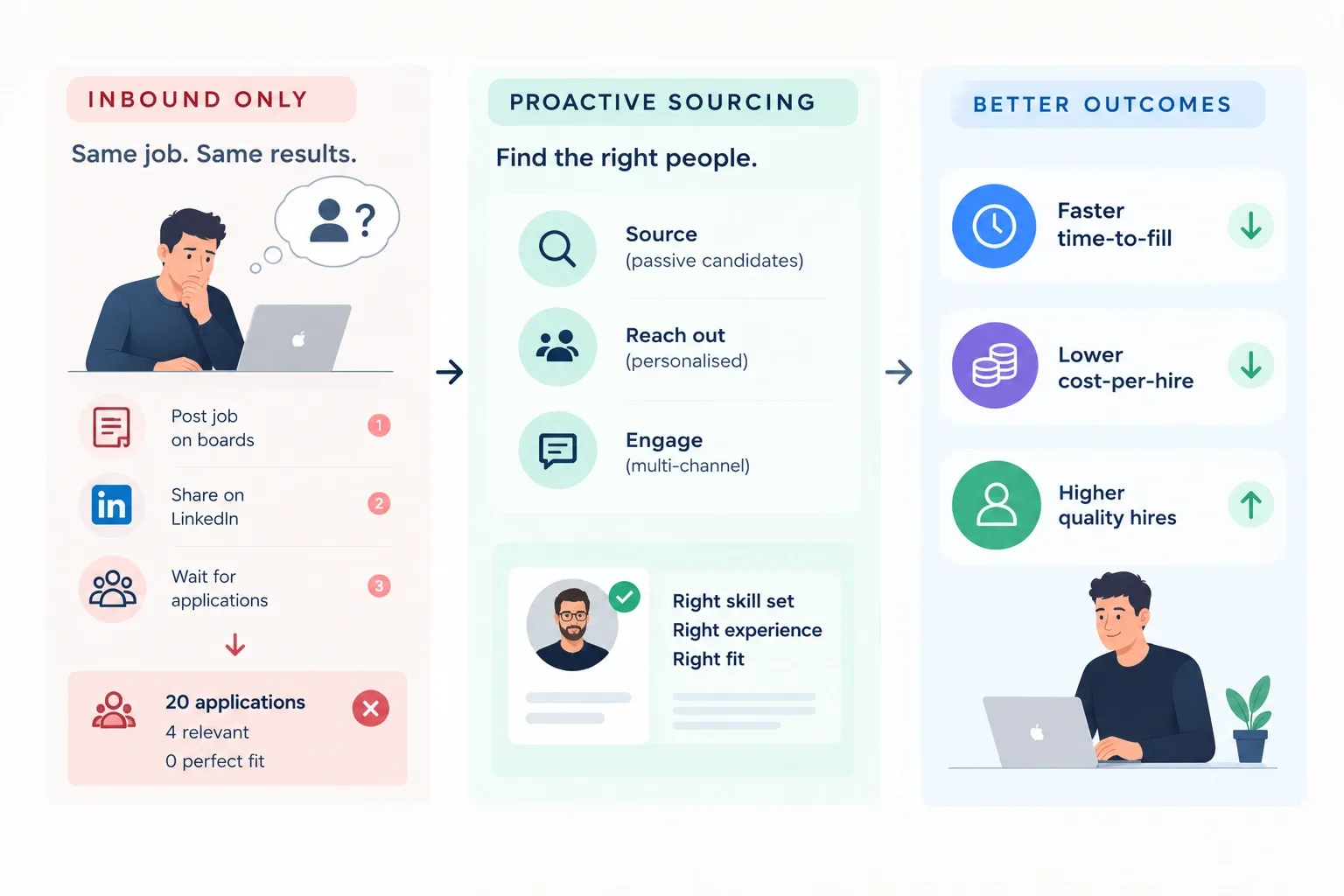
The cost of getting this wrong is measurable. Time-to-fill and cost-per-hire both climb when a business relies purely on inbound applications for roles that need outbound sourcing. Recent SHRM benchmarking data puts average cost-per-hire well into four figures for non-executive roles, a figure that only grows the longer a seat stays empty. For an IT recruitment agency working technical roles specifically, the gap is often worse. Developers and engineers with in-demand skills are rarely browsing job boards, which makes sourcing, not recruiting, the bottleneck.
Picture a ten-person startup that needs a senior backend engineer. The founder posts the role on a couple of job boards, shares it on LinkedIn, and waits. Three weeks have passed. Twenty applications arrive, four are vaguely relevant, and none has the specific infrastructure experience the product actually needs. The instinct at this point is often to blame the recruiting process: maybe the interview questions are wrong, maybe the job description needs rewriting. Usually the real issue is upstream: nobody went looking for the engineer who fits. Fixing the job description won’t change that. Proactive sourcing, aimed specifically at people already doing that exact kind of work elsewhere, would.
How a combined sourcing-and-recruiting partner works in practice?
At Digifinity, sourcing and recruiting aren’t two separate products a client has to stitch together themselves. Most engagements start with a short call: what the role actually needs, which requirements are real and which are wishlist items, and roughly what timeline and budget we’re working with. Our sourcing services team takes it from there, building a targeted outreach list and starting the first conversations, while recruiters are already writing the screening criteria on the other end. That way there’s no lag once candidates start replying; the next step is ready before it’s needed.
Where are sourcing hands off to recruiting?
There isn’t a formal handoff meeting or a box someone ticks. Once a candidate shows genuine interest and clears the baseline requirements, they simply move into formal screening, usually the same day. Both sides work off the same applicant tracking system, whether that’s Greenhouse, Lever, or whatever the client already has running, so nobody’s digging through a separate spreadsheet to find out where a candidate stands or what feedback an interviewer left. Clients who’d rather keep sourcing and recruiting as two distinct, separately managed services can ask for that too. The bundled version is the default, not a requirement.
When to outsource one half, and when to outsource both?
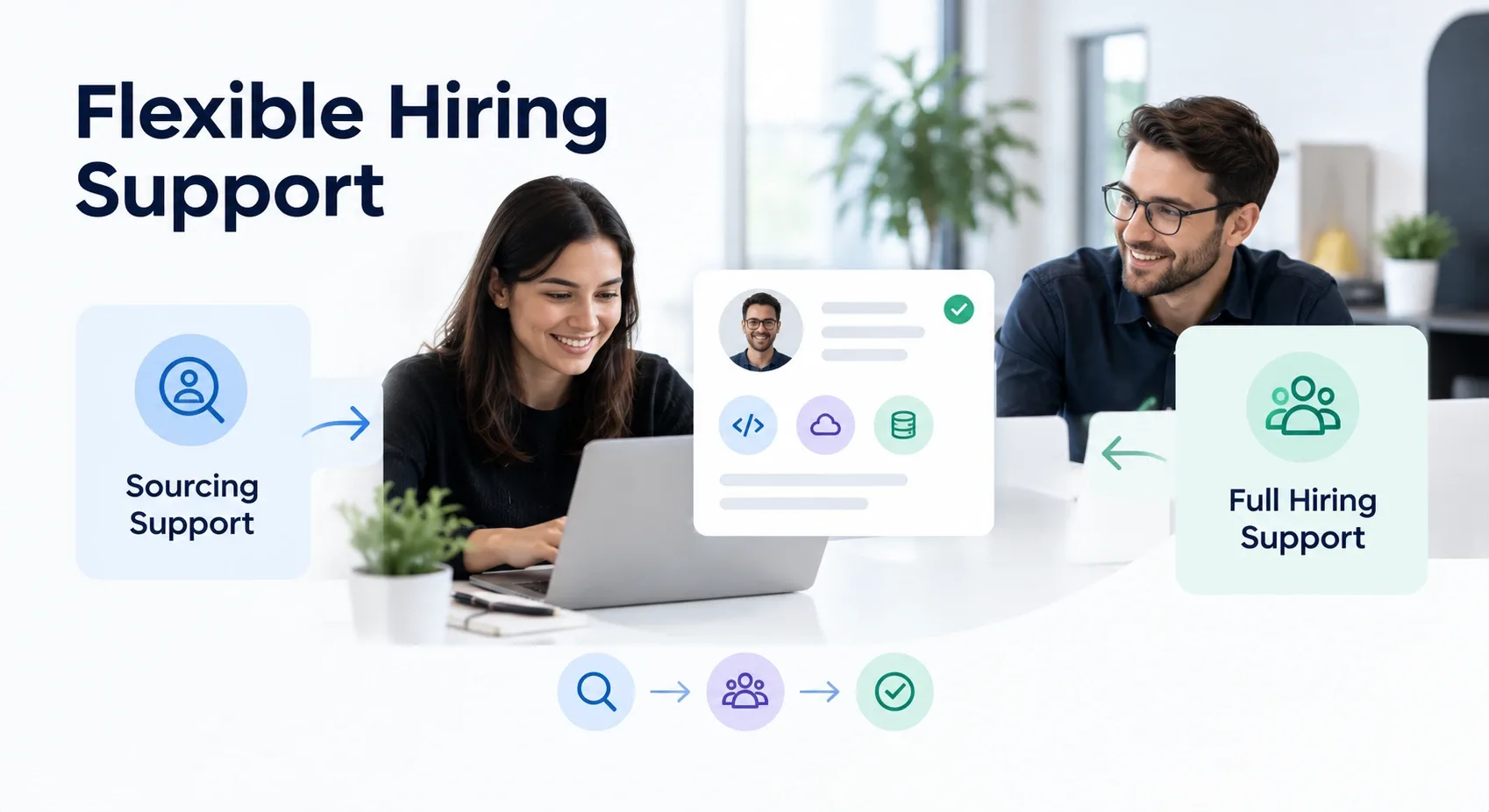
Some clients only need sourcing support from an internal team that’s confident running interviews but starved of qualified candidates to interview. Others want the whole thing handled, particularly for high-volume or highly technical hiring rounds where neither sourcing nor screening can be handled by a small internal team alone. As one of the top recruitment companies serving US small businesses, we structure engagements around which half of the process is actually broken, rather than selling a one-size-fits-all package.
Why do businesses choose Digifinity for both sides of hiring?
Digifinity works as a recruitment marketing agency as much as a staffing partner, which matters because sourcing today depends heavily on how a role and a company are presented to passive candidates. A generic job ad gets ignored. A message that speaks directly to what a specific engineer or specialist cares about gets a reply. That’s the difference between sourcing that produces a real pipeline and sourcing that produces silence.
Labour market data backs this up, too. Bureau of Labor Statistics figures on job openings and hires have kept pointing in the same direction for a while now: skilled roles stay competitive, and businesses sitting back waiting for applications are fighting over a smaller and smaller slice of who’s actually available. Bringing sourcing and recruiting together under one team doesn’t fix the market. What it does is cut out the wasted time between the two functions, catch candidates before they slip through a handoff, and give a small team something they can genuinely keep pace with instead of a process that quietly falls behind.
There’s also a trust question that matters more for smaller businesses than it might seem at first. A founder handing hiring over to an outside partner is trusting that partner with how their company gets represented to future employees, often the first real interaction a candidate has with the brand. That’s a reason to favour a partner who treats outreach as more than a numbers game, and who can speak credibly about the actual role rather than reading from a script. It’s also why cost shouldn’t be the only factor weighed here: a cheaper sourcing service that sends generic, low-response outreach ends up costing more in the long run through wasted weeks and empty pipelines than a slightly higher-priced service that fills the role properly the first time.
Beyond staffing, businesses scaling their online operations alongside their headcount sometimes ask us about adjacent support too, from ecommerce solutions to broader digital growth work worth a mention if hiring is only one part of what you’re trying to scale this year.