
Ecommerce PPC Management Measured on Profit, Not ROAS

Most of that 6x return is people who already knew your brand name.

Blend brand search into your reporting and almost any account looks healthy. Separate it and the real question appears: what did paid actually create that organic wouldn’t have delivered anyway? We run Shopping, Performance Max and Meta for US brands with brand and non-brand reported separately, measured against contribution margin. Sometimes that conversation ends with us recommending you spend less.

clients

+50 Clients

multitudes of brands have already trusted us

services included

Seven areas, and the first one decides the rest. Feed quality determines what Shopping and Performance Max can do with your budget, and no amount of bid management compensates for a weak product feed.

Merchant Center & Feed Optimization Google Shopping Campaigns Performance Max Management Search & Brand Protection Meta & Paid Social Landing Pages & Tracking Reporting & Incrementality

Merchant Center & Feed Optimization

Product titles, attributes, GTINs and custom labels structured so campaigns can segment by margin rather than by category alone. Disapprovals cleared before spend scales. This is the highest-leverage work in ecommerce paid media and the least often billed for.

get a quote

Google Shopping Campaigns

Standard Shopping run alongside Performance Max where control matters, segmented by product profitability instead of one campaign carrying the whole catalogue. Bestsellers and long-tail products need different bidding, and a single campaign gives both the same treatment.

get a quote

Performance Max Management

Asset groups, audience signals and brand exclusions configured so PMax stops absorbing branded search and reporting it as new performance. Run without exclusions, it reliably overstates its own contribution, which is why it looks so good by default.

get a quote

Search & Brand Protection

Non-brand search built around commercial intent, with brand campaigns run separately and reported separately. We'll show you what brand defence actually costs and whether competitors bidding on your name justify it, often they don't.

Get a Quote

Meta & Paid Social

Advantage+ Shopping and manual campaigns with creative testing run as a structured programme rather than ad-hoc refreshes. On Meta the creative is the targeting now, so production cadence matters more than audience configuration.

Get a Quote

Landing Pages & Tracking

Conversion tracking, consent mode and server-side setup verified before optimisation begins, plus landing page work where the drop-off is post-click. Paying to fix a conversion problem with more traffic is the most common ecommerce budget leak.

Get a Quote

Reporting & Incrementality

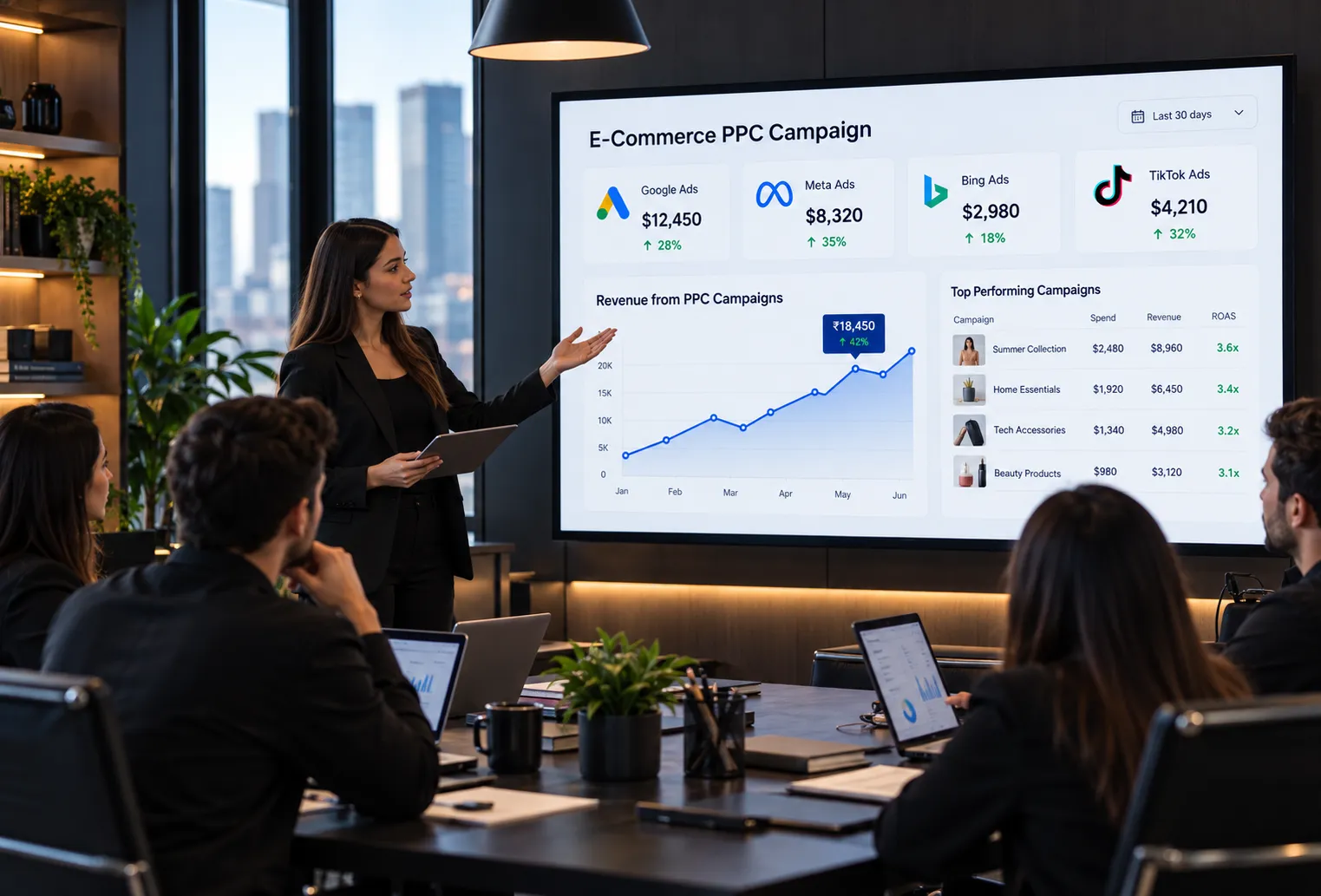
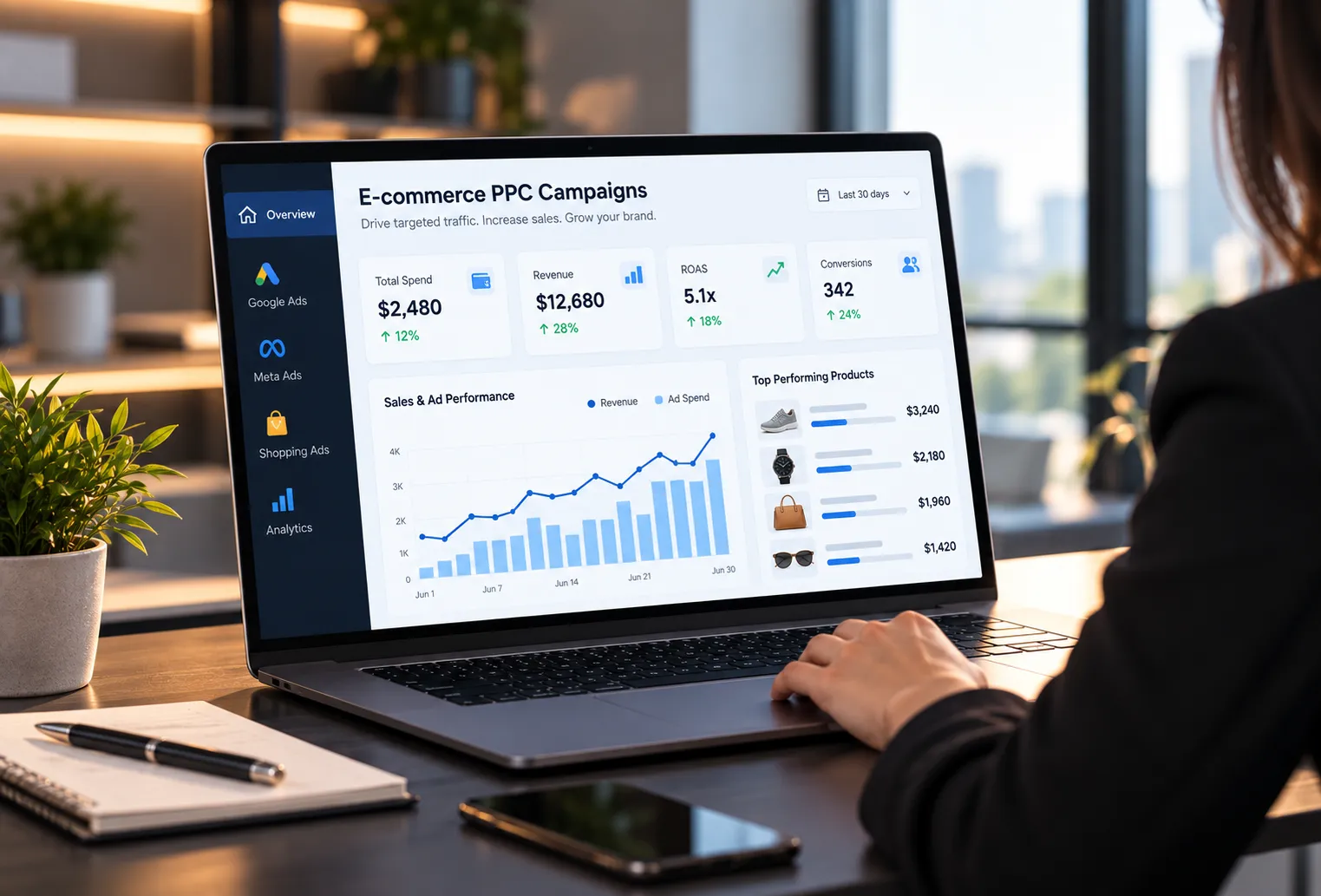
Brand and non-brand separated, marketing efficiency ratio and contribution margin reported alongside platform ROAS, and geo holdout tests where the spend justifies them. Platform-reported return is a claim by the platform selling you the traffic.

Get a Quote

// Tools & Technologies Section

// How We Run Your Ad Accounts?

Separated
Brand and non-brand reported apart, always. An ecommerce PPC consultant who shows you one blended return is showing you your existing customers and calling it performance.
Margin-led
Feed custom labels built by product profitability so budget follows contribution, not revenue. Scaling a high-revenue, low-margin bestseller is how accounts grow while profit shrinks.
Tested
Geo holdouts and incrementality tests where spend justifies them. We'd rather prove paid created demand than assume the platform's attribution is honest about it.

work

One sequence from feed audit to scaled spend, with profitability proven at each rung before climbing.

process

1

Account audit

Feed health, tracking accuracy and brand overlap measured first.

2

Feed rebuild

Titles, attributes and margin-based custom labels restructured.

3

Structure reset

Campaigns segmented by profitability, brand exclusions applied.

4

Controlled scaling

Budget raised only where incremental margin holds.

5

Ongoing testing

Creative, bidding and holdout tests reviewed every month.

What an Ecommerce Paid Search Agency Should Report Separately

Three numbers keep this category honest: non-brand return, marketing efficiency ratio across all spend, and contribution margin after fees and shipping. An agency reporting only blended ROAS is reporting the friendliest available figure.

// testimonials

4.9 / 5.0 clients review

What Our Clients Say

Give us read access,

not a budget number!

We’ll split brand from non-brand and show you what paid actually created.

    FAQs

    How much does ecommerce PPC management cost?
    Usually a monthly retainer or a percentage of spend, typically 10–20% at mid-market level, with a floor for smaller accounts. Percentage-of-spend has an obvious incentive problem, which is why we prefer flat retainers. Non-ecommerce accounts are handled through PPC management services instead.
    Do you manage Amazon Ads as well?
    Different discipline and a different page. Amazon Ads run on ACoS and TACoS inside a closed marketplace where the product listing is the landing page, so the levers barely overlap with Google. That work sits with Amazon PPC management.
    Our marketplace listings convert badly. Is that a PPC problem?
    No, on marketplaces the listing is the landing page, so ad spend amplifies whatever the listing already does. Titles, imagery and backend attributes have to be fixed first, which is handled through product listing optimization rather than through bid management.
    Should we run SEO alongside paid?
    Yes, and it changes how you read the numbers. Once organic ranks for a term, continuing to bid on it often buys clicks you'd have had free. That's why ecommerce SEO services and paid should be planned together rather than by separate teams.
    Our ads convert badly but traffic is fine. What now?
    Usually a post-click problem rather than a targeting one. Page speed, checkout friction and app bloat cost more conversions than bidding ever recovers. Diagnosis sits with development, shopify store development handles speed and checkout work alongside our landing page recommendations.
    Is our site even ready for paid traffic?
    Worth asking before spending. If conversion rate sits well below 1% on qualified traffic, paid amplifies a structural problem. We'd rather say so than take the retainer. Store rebuilds and conversion work run through ecommerce website development.
    What is a good ROAS for ecommerce?
    There is no universal figure, because ROAS ignores margin. A 3x return on a 70% margin product is profitable; a 6x return on a 20% margin product may not be. Use marketing efficiency ratio, total revenue divided by total ad spend, and contribution margin after fees, shipping and returns.
    Should you bid on your own brand name?
    Sometimes, and it should always be measured separately. Brand clicks are cheap and convert well, which makes blended reporting look excellent while proving nothing. Defensive brand bidding is justified when competitors bid on your name or your organic listing sits below ads. Test with a geo holdout before assuming.
    Why don't Google Ads numbers match Shopify revenue?
    Different attribution models. Google Ads credits conversions to the click within its lookback window, while Shopify credits the last touch before checkout, so the same sale appears in both or neither. Expect a gap. Use platform data for optimisation decisions and your own store data for what the business actually earned.
    Prev
    Next