

Realistic monthly benchmarks from b2b lead generation companies:
Ask five sales leaders how many appointments outbound should produce each month and you will hear five confident numbers. Most of them will be guesses. A target pulled from last quarter’s wishful forecast, or from what a competitor claimed on a podcast, tends to unravel by week three.
The honest answer depends on your deal size, your market and how tightly you define a qualified meeting. This guide gives you working ranges, the formula to build your own figure, and the questions to put to b2b lead generation companies before you sign anything. If you want the short version first, our team at Digifinity sees most mid-market B2B programmes settle between 10 and 25 qualified first meetings a month once they are properly running. Public data tells a similar story: a 3% to 6% reply rate is a normal, healthy benchmark for broad B2B cold email in 2026, according to Apollo’s outbound benchmark guide.
Why Most B2B Appointment Targets Miss the Mark?
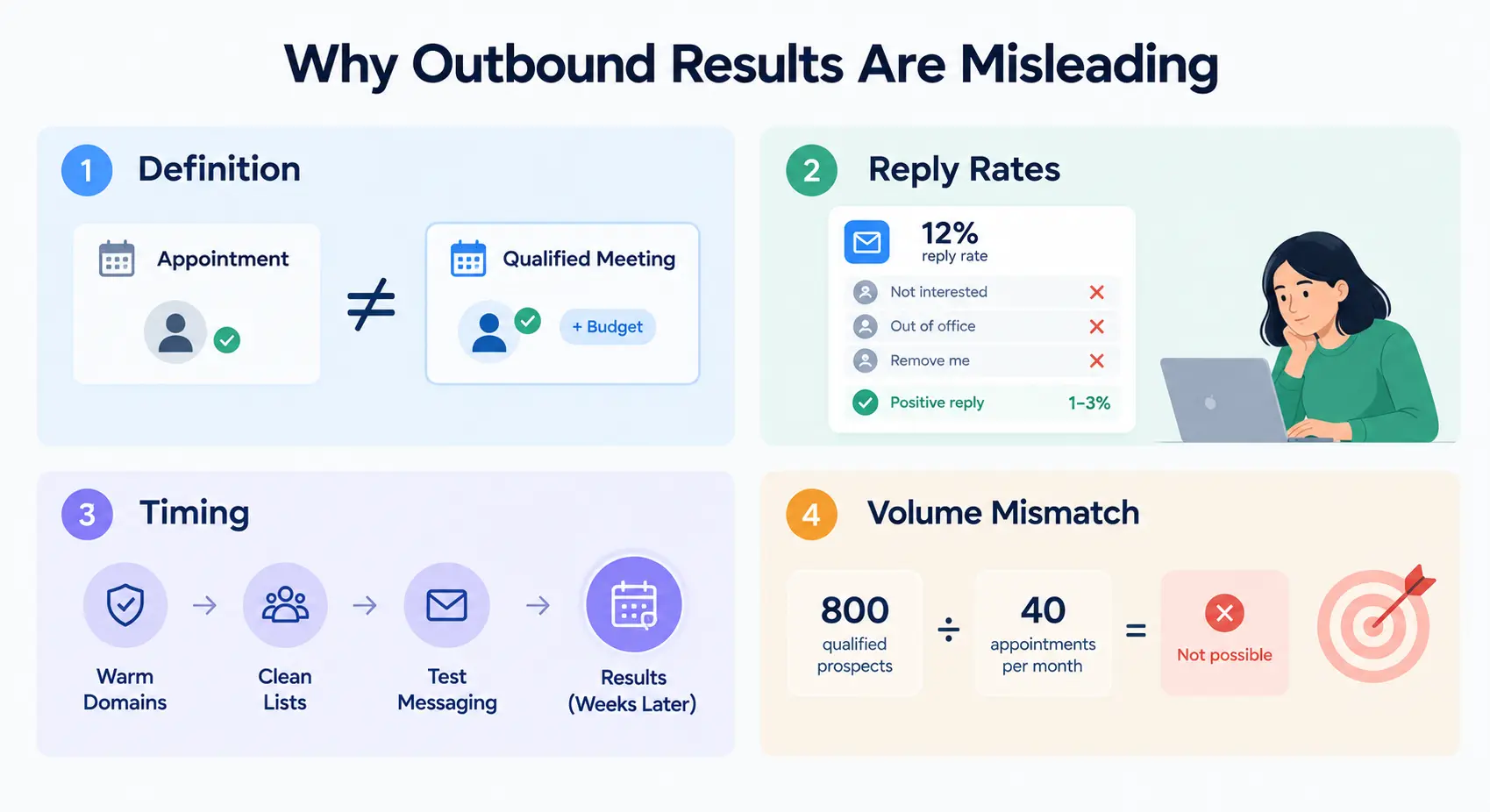
The first problem is definition. One company counts any booked call as an appointment. Another only counts a meeting where a decision-maker with a budget turned up and the problem was confirmed. Both call the result “appointments”, yet the second number can be a third of the first. If you compare vendors or internal teams without fixing the definition, you are comparing nothing.
The second problem is that reply rates get mistaken for results. A campaign can show a healthy-looking response rate and still produce almost no meetings, because most replies are polite refusals, out-of-office messages or requests to be removed. Positive replies are the figure that matters, and they are a fraction of the headline.
The third is timing. Outbound does not switch on like a paid advert. Domains need warming, lists need cleaning, messaging needs two or three rounds of testing. Teams that expect a full pipeline in week one often abandon a sound programme just before it starts to pay back.
Finally, there is a volume mismatch. A founder wants 40 appointments a month but has only 800 genuinely well-fitting prospects in the market. The arithmetic simply does not allow it, and no amount of sequence tweaking will change that.
Ready to see what a tailored target looks like for your market?
Explore the outbound and appointment setting services Digifinity delivers for US B2B teams, from list building to booked meetings.
What a Realistic Monthly Appointment Number Looks Like?
Start with the funnel. Across published benchmark studies, the average cold email reply rate sits around 3.43%, according to Cleverly’s cold email statistics. Another analysis puts the email-to-booked-meeting rate at 0.5% to 2% for typical B2B teams, and just over 2% for top performers. Studies measure these things differently, which is why the ranges are wide. The practical lesson is that email alone converts roughly one in every 100 prospects contacted into a meeting when targeting and deliverability are sound.
Put that against realistic volumes and you get working ranges. Treat the table below as planning guidance drawn from funnel maths and programme experience, not a guarantee.
| Average deal value | Prospects contacted per month | Realistic qualified first meetings | Typical sales cycle |
| Under $10,000 | 3,000 to 5,000 | 25 to 40 | 2 to 6 weeks |
| $10,000 to $50,000 | 1,500 to 3,000 | 12 to 25 | 1 to 3 months |
| Over $50,000 (enterprise) | 500 to 1,200 | 5 to 12 | 3 to 9 months |
Notice that the higher the deal value, the lower the appointment count, and the more each appointment is worth. Chasing volume in an enterprise sale usually damages the very accounts you want.
Multi-channel programmes lift these figures. Adding phone and the kind of outreach a linkedin lead generation agency runs to email typically improves both reach and reply quality, because a prospect who sees your name in two places treats you as more credible. Even so, the average number of touches needed to secure a first meeting with a cold B2B prospect is around eight, so a single email and a hopeful follow-up will not get you there.
How to Calculate Your Own Appointment Target?
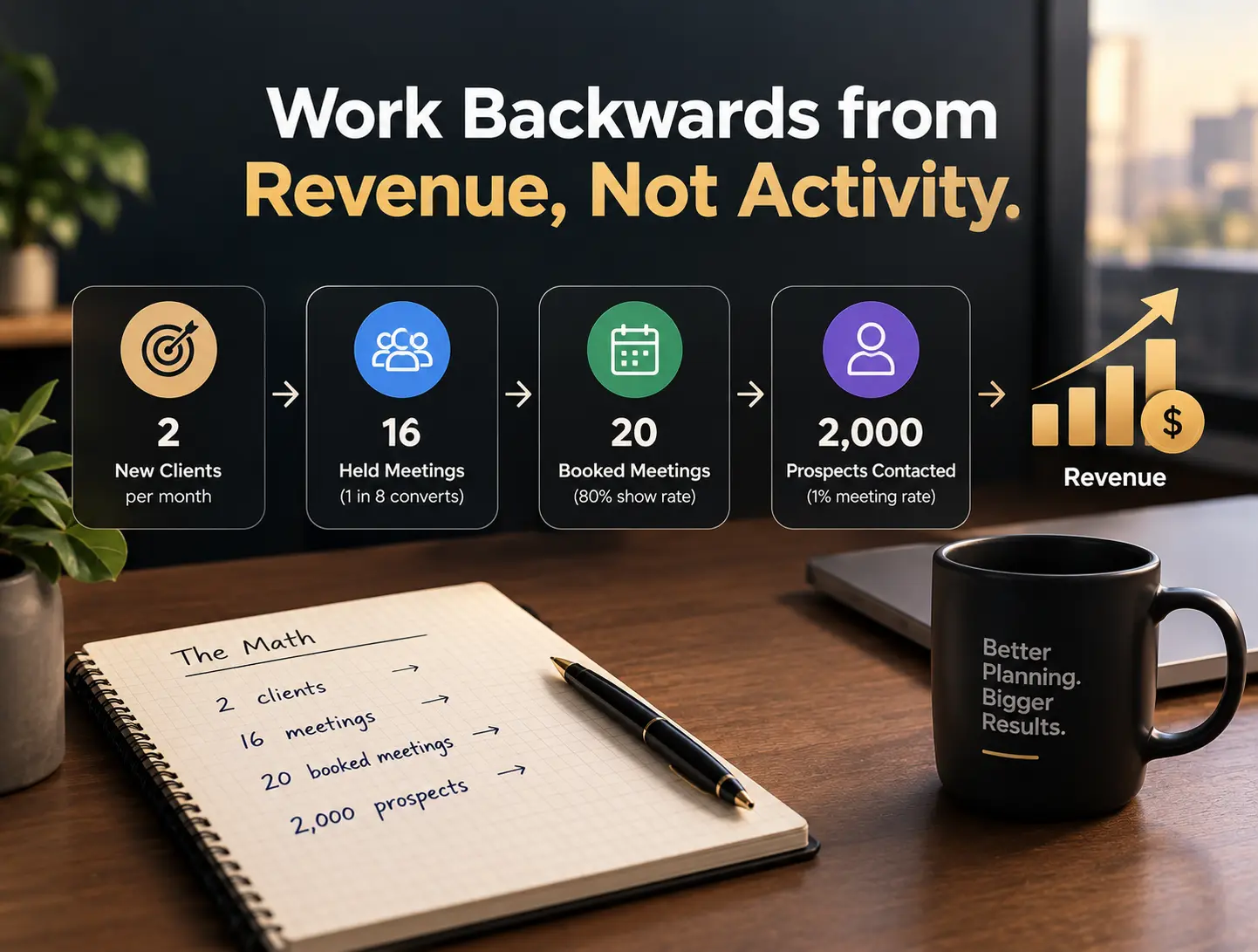
Work backwards from revenue, not forwards from activity. The sequence is simple, and it is worth doing on paper before any campaign launches.
Say you want two new clients a month. If historically one in eight held meetings becomes a client, you need 16 held meetings. Show rates for booked meetings run at roughly 80%, according to LeadHaste’s 2026 outbound benchmarks, so you need about 20 booked meetings. If your realistic meeting rate is 1% of unique prospects contacted, that means reaching around 2,000 well-matched prospects each month, across multiple touches.
Now test it against your market. Can you sustain 2,000 new, correctly targeted contacts every month, or will you exhaust your addressable list in a quarter? If the second, your target should drop, your deal value should rise, or you should widen the audience. Many programmes stall because nobody ran this check, and a good b2b lead generation agency will run it with you before quoting a single number.
What Actually Drives Appointment Volume?
Five levers explain most of the gap between a programme that delivers and one that disappoints:
- List quality: accurate contacts, verified emails and a tight ideal customer profile. This single factor outweighs copy.
- Deliverability: warmed domains, clean sending practices and monitored inbox placement. If messages land in spam, nothing else matters.
- Message relevance: a specific problem, a specific role and one clear ask, rather than a product pitch.
- Speed of follow-up: interested replies handled within hours, not days. Delay quietly halves conversion.
- Channel mix: email carrying the volume, LinkedIn building familiarity, phone catching high-value accounts.
Each of these functions as a multiplier. Improve two of them modestly and the monthly number can climb by half without sending a single extra email.
The Business Impact of Getting the Number Right:
A believable target changes how a business behaves. Sales managers can hire against it, finance can forecast against it, and marketing stops being asked to explain a gap that was never realistic.
It also changes the quality of the pipeline. When a team is held to an inflated appointment count, reps and vendors start booking weak meetings to hit the figure. Show rates fall, opportunities stall, and the sales team loses faith in outbound altogether. A modest target built on qualified meetings tends to produce fewer calls and more closed deals, which is the measure that pays salaries.
There is a buyer-psychology point too. Prospects respond to relevance and restraint. A programme sized to your actual market contacts the right people at a sensible pace, which protects your brand name as well as your pipeline.
How a Structured Outbound Programme Works?
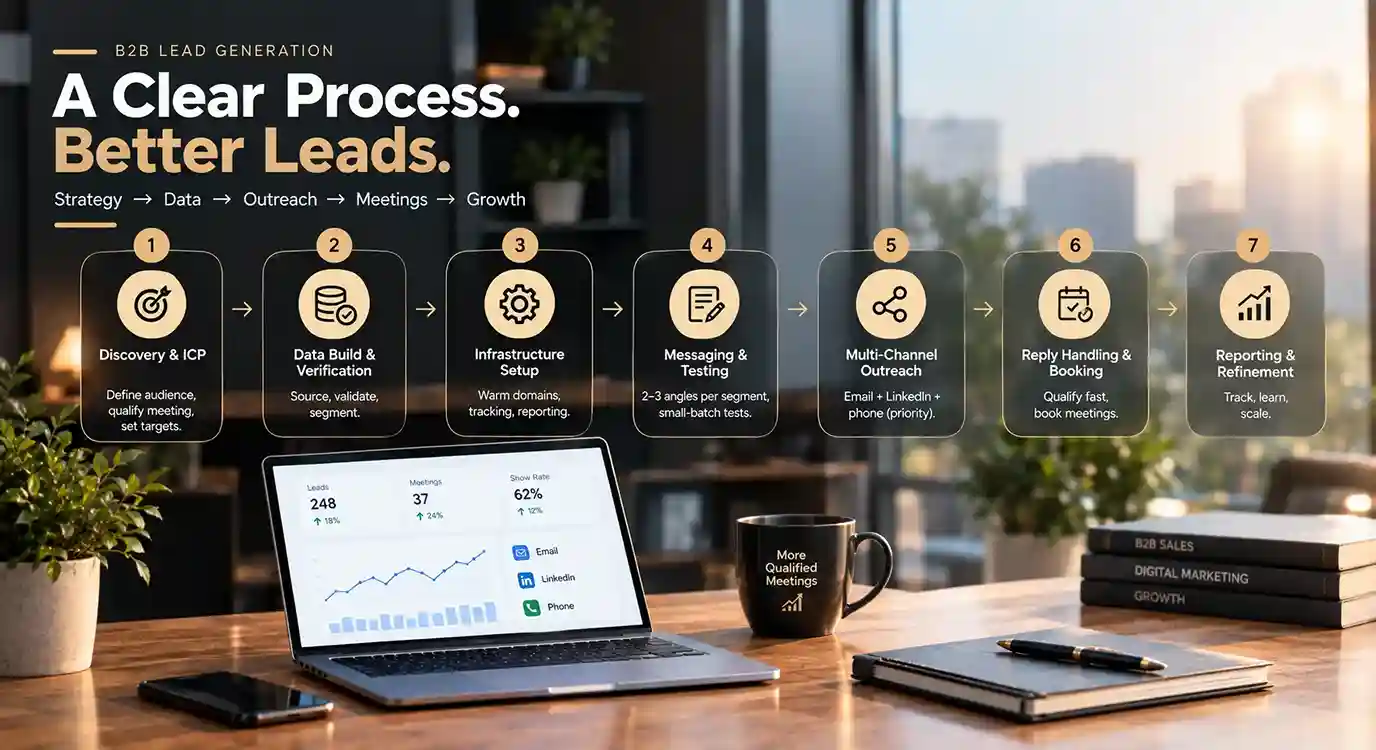
A well-run engagement follows a clear sequence, and each stage feeds the next:
- Discovery and ICP definition: agree who you sell to, what a qualified meeting means, and the monthly target the data supports.
- Data build and verification: source and validate contacts, then segment by role, industry and buying trigger.
- Infrastructure setup: configure and warm sending domains, set up tracking and reporting.
- Messaging and testing: write two or three angles per segment and test them on small batches before scaling.
- Multi-channel outreach: run coordinated email, cold email outreach sequences and LinkedIn touches, with phone for priority accounts.
- Reply handling and booking: respond fast, qualify against your criteria, and place meetings directly in your reps’ calendars.
- Reporting and refinement: review meeting rate, positive replies and show rate weekly, then adjust.
Most programmes reach a stable rhythm in the second or third month, once testing has told you which message and segment pair work best.
The Technology Behind Consistent Appointments:
You do not need an exotic stack, but you do need the right pieces working together: a sequencing platform for email and LinkedIn, an email verification layer, a CRM that records every touch, and calendar tooling that lets prospects book without back-and-forth. Inbox monitoring matters more than people expect, because a drop in placement shows up days before a drop in meetings.
AI can speed up research and first-draft personalisation, but generic AI-written outreach is now everywhere, and buyers recognise it. The teams winning meetings use technology to scale research, then put human judgement on the message that actually gets sent.
What Outbound Appointments Cost?
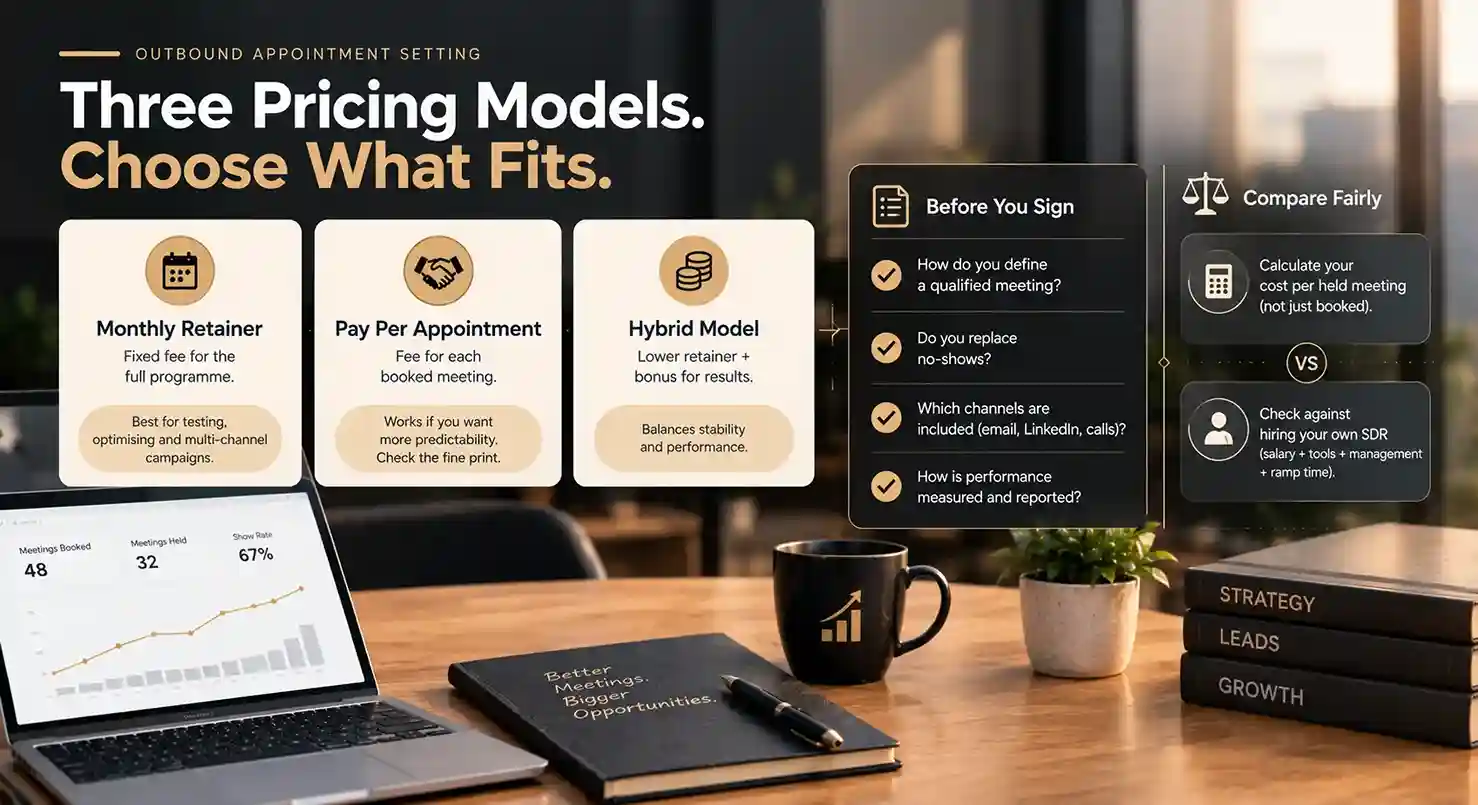
Outbound appointment setting is usually priced in one of three ways. Some providers charge a flat monthly retainer for the whole programme. Others charge a fee for each appointment they book. A few mix the two, with a lower retainer plus a bonus for results.
A retainer tends to work better if you want the campaigns tested and tweaked month after month, and if you want email, LinkedIn and calls running together. Paying per appointment sounds like the safer option, but read the small print first. Ask how the provider decides what counts as a qualified meeting, and whether they replace the ones where the prospect doesn’t turn up.
When you compare quotes, take the monthly cost and divide it by the number of meetings that actually took place, not the number that were booked. That gives you a cost per held meeting, which is a fair way to compare providers. You can also use it to check the numbers against hiring your own SDR, once you count their salary, software, management time and the few months it takes them to get up to speed.
Choosing Between B2B Lead Generation Companies:
There are plenty of b2b lead generation companies in the US market, and their pitches sound remarkably alike. Separate them by asking for specifics. How do they define a qualified appointment? Who owns the data and the sending domains if you leave? What is their average show rate? Can they show campaign reporting from a comparable client?
Look for providers who build the programme around your criteria rather than a fixed script, and who are willing to say when your target is unrealistic. A vendor who agrees with every number you give them has probably not checked it. Where a provider also handles content or paid work, ask how outbound connects to it, since the strongest results come when those channels reinforce each other.
For companies that want to hand over the whole function, b2b sales outsourcing can cover prospecting through to booked meetings. Take care to see how reporting works, because outsourcing only pays off if you can see what is happening.
Why Choose Digifinity?
Digifinity builds outbound programmes around qualified meetings, not activity metrics. We start every engagement by testing your target against your addressable market, so the number we agree is one the data can support. Our US campaigns combine verified data, multi-channel outreach and fast reply handling, with weekly reporting you can check against your own CRM.
We also keep contracts straightforward. You own your campaign data, you see every metric, and we replace no-shows. If a target is unrealistic, we say so in the first call rather than the third month. For teams who want a sales appointment setting services partner that behaves like part of their own sales function, that candour is usually what tips the decision.
Start sooner rather than later. Outbound compounds: lists improve, messaging sharpens and domains build reputation. A programme launched this month is producing its best results while a late starter is still on week two.