

A LinkedIn Lead Generation Agency’s Honest Breakdown of What’s Going Wrong?
You send fifty connection requests. Twelve accept. You follow up. Nothing. A week later you try again, a bit more direct this time, and still nothing comes back. By the end of the month you’ve sent hundreds of messages and booked one call, maybe, and it wasn’t even a good fit.
If that sounds familiar, it helps to look at this the way a linkedin lead generation agency would: as a system with a fault somewhere in it, not as a channel that’s simply stopped working.
For an outside read on how the platform itself is meant to be used, LinkedIn’s own guidance for sales teams is a decent starting point, though it leans a little optimistic about the channel it’s selling. Fair enough, that’s their job. In most cases, the problem isn’t LinkedIn and it isn’t your product. It’s the mechanics of the outreach itself. Once those mechanics are visible, they tend to be fixable, and usually faster than people expect.
That’s a hard thing to hear if you’ve spent weeks tweaking subject lines and swapping out your profile headshot. But it’s also good news. A broken product can take months to fix, if it’s fixable at all. A broken outreach system can usually be diagnosed within a week and rebuilt within a month. The levers targeting, sequencing, cadence, follow-up are all things you can see and measure directly, not vague brand perception problems.
The Silence Is a Signal, Not Bad Luck:
A dead inbox tells you something specific. The message didn’t earn a response from the person who read it. That’s rarely random. Engagement patterns, prospect psychology, basic message hygiene they all point the same direction. Weak reply rates are the predictable outcome of a handful of habits, repeated at volume.

We’ve audited outreach accounts for dozens of clients over the years. The same five or six issues turn up again and again, regardless of industry or deal size. Recognising them is step one. Rebuilding the system around better habits is step two, and that’s usually where in-house efforts stall fixing outreach properly takes ongoing testing, not a single tweak to a template.
What tends to surprise founders and marketing leads is how fast reply rates respond once the right fix lands. It’s rarely a full rewrite of the messaging that changes things. More often it’s one specific habit, usually targeting, sometimes just the opening line, quietly suppressing every message sent after it.
See Our LinkedIn Outreach Process in Action
We’ve refined this system across dozens of B2B accounts. Explore our services page to see how targeting, sequencing, and reporting fit together in a live campaign.
Where Most B2B Companies Go Wrong on LinkedIn?
Generic, Copy-Paste Messaging:
“Hi {FirstName}, I noticed we’re both in the SaaS space and thought it’d be great to connect!” Someone who’s seen that exact template a dozen times this month isn’t replying to the thirteenth version of it. Personalisation has to go beyond a mail-merge field. It needs to reference something specific enough that the recipient knows an actual person looked at their profile before writing.
Selling in the First Message:
Pitching before any context exists is the fastest way to get ignored, or blocked outright. LinkedIn behaves like a relationship channel first, a sales channel second. Treat it like a cold email blast minus the subject line, and you’re misreading how people actually use the platform day to day.
No Targeting Discipline:
Casting a wide net feels productive because the activity numbers look busy. But reply rates collapse once messages land with people who have no real buying authority and no active need. A tighter list of fifty genuinely qualified prospects, researched properly, beats a loose list of five hundred almost every time.
Treating LinkedIn Like a Second Inbox for Email:
Email sequences are built around subject lines and inbox-scanning habits. LinkedIn competes against notifications, feed scrolling, mobile-first reading a different set of behaviours entirely. A message written for email and dropped into LinkedIn unchanged usually reads as slightly off, and prospects pick up on that even when they can’t quite name what’s wrong with it.
Ignoring the Data After the Campaign Launches:
Plenty of teams set up a sequence, hit send, and don’t look at it again until someone asks why the pipeline is thin. Reply rate, positive-reply ratio, time-to-response — these shift week to week. A campaign nobody’s reviewing is running on guesswork by the second week, no matter how sharp the original messaging was.
None of these five issues are unusual, and none are particularly embarrassing. They show up in outreach run by seasoned sales teams about as often as they show up with first-time founders. What separates the accounts that recover from the ones that stay stuck is usually just whether someone’s watching the numbers closely enough to catch the pattern early.
What Buyers Are Actually Telling Us About Outreach?
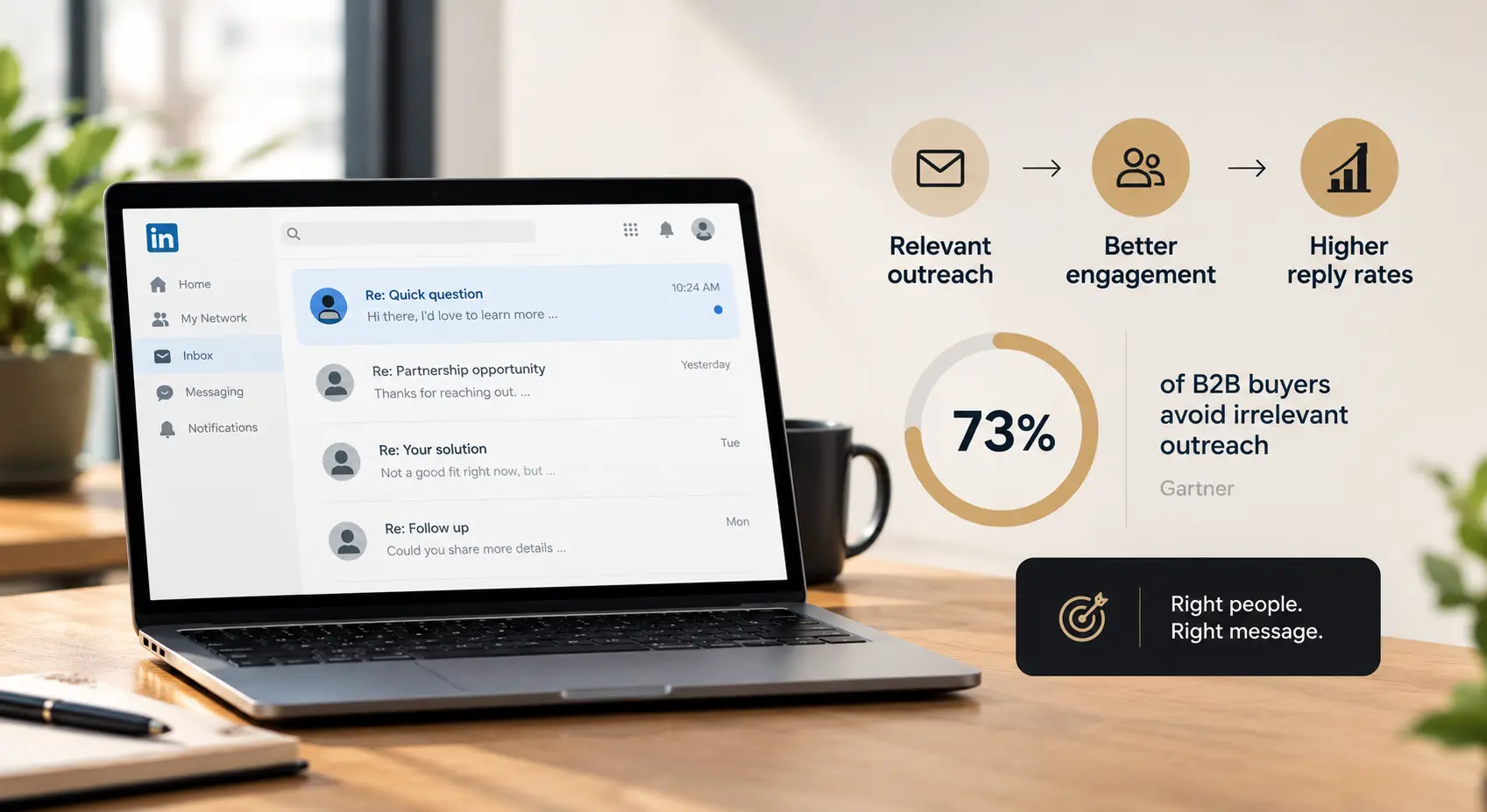
Let’s be honest about environmental outreach these days. A recent B2B buyer survey from Gartner found that 73% of buyers actively avoid suppliers who send irrelevant outreach. Volume without relevance doesn’t just underperform. It can work against you.
That doesn’t mean ditch outreach altogether, it means being a lot more deliberate about who gets a message and why. Buyers aren’t turning their backs on LinkedIn as a channel. What they’re rejecting is outreach that clearly wasn’t built with them in mind, and most of them can tell the difference within a sentence or two. The teams still pulling strong reply rates, agency or in-house, are usually the ones who’ve made that distinction central to the strategy rather than something mentioned once in a kickoff call and then forgotten.
What a Properly Run LinkedIn Outreach Programme Looks Like?
Reply rates worth caring about look like double digits, not the one or two percent most companies quietly settle for. Getting there means treating outreach as a system with measurable inputs, not a volume game. And the benchmarking backs up recent industry data puts average LinkedIn reply rates at double the response rate of email, at least for campaigns running disciplined targeting.
That system rests on four things working together. A tightly defined ideal customer profile. Message sequences written for how people actually read on LinkedIn. A cadence that respects the platform’s unwritten etiquette. And a feedback loop where reply data shapes the next batch of messaging. Drop any one of those four and the whole thing underperforms, however strong the other three are.
Cadence is the one team that gets wrong the most, and it’s worth calling out on its own. Three follow-ups crammed into five days feels like pressure, not persistence. Most prospects won’t even bother typing “no,” they’ll just stop opening your messages. Spread things out over two or three weeks instead. Give people room to actually notice you before you show up again. It’s a small change, but it’s usually the difference between a campaign that holds up over months and one that burns out after the first round of sends.
Core Components of a High-Reply-Rate LinkedIn System:
- Precision targeting: built from firmographic and intent data, not a broad job-title filter
- Message sequencing: three to five touches, each with a distinct angle, not the same pitch repeated with softer wording
- Personalisation at scale: research-backed openers referencing something real about the prospect’s role, company, or recent activity
- Response handling playbooks: pre-built paths for objections, soft interest, and referrals, so momentum isn’t lost between reply and booked call
- Performance tracking: connection rate, reply rate, and meeting rate reviewed weekly, not quarterly
This is the same discipline our team applies through Digifinity’s linkedin lead generation services, where sequencing and targeting get refined against live reply data instead of running unchanged for months.
Why Does This Actually Move Revenue, Not Just Vanity Metrics?
Connection acceptance rates are easy to celebrate and easy to game. They don’t pay the bills though. What matters is the number of qualified conversations that turn into pipeline, and that depends on targeting quality just as much as message quality. A well-run outbound lead generation motion on LinkedIn feeds a predictable stream of sales conversations. That’s a very different outcome from a pile of polite, empty acceptances going nowhere.
For B2B companies with longer sales cycles, LinkedIn does something email struggles with: it builds a recognisable presence over time. A prospect who ignores your first message in March might remember your name in September when a relevant need finally shows up, provided the earlier interaction wasn’t tone-deaf or overtly salesy. That slow-build credibility rarely shows up in a single month’s reporting, which is part of why it gets undervalued internally.
It’s also where a lot of internal reporting gets the story wrong. A sales leader looking only at last month’s booked calls might judge an outreach programme as underperforming, when really it’s quietly building the recognition that closes a deal two quarters down the line. Attribution on long sales cycles is genuinely hard. It’s one reason agencies who specialise in this track reply-to-meeting-to-opportunity ratios over a rolling quarter, not a single month in isolation.
How We Run LinkedIn Outreach at Digifinity?

We start by rebuilding the targeting layer, usually pulling from a verified b2b data provider rather than leaning on LinkedIn’s native filters alone. Job titles and company data drift out of date faster than most teams realise. From there we draft sequences specific to the ICP, test against a smaller segment first, and only scale the messaging once reply-rate data confirms it’s working, rather than assuming the first draft got it right.
Clients typically see the shift within three to four weeks. Not because we send more messages, but because every message going out is doing more work. And the early testing phase matters more than people assume: acceptance rates vary sharply by industry, with sectors like staffing and recruiting running well above others such as consumer electronics. A targeting assumption that worked for one client rarely transfers cleanly to the next without some adjustment.
Comparing DIY Outreach vs. a LinkedIn Lead Generation Agency:
| Factor | In-House DIY Outreach | LinkedIn Lead Generation Agency |
| Targeting accuracy | Manual filters, often outdated | Verified data sources, refreshed regularly |
| Message testing | Rare, ad hoc | Structured A/B testing on live campaigns |
| Time investment | High, ongoing distraction from core role | Managed end-to-end |
| Typical reply rate | 1–3% | 8–15%, depending on ICP and industry |
| Scalability | Limited by individual bandwidth | Built to scale across multiple sender accounts |
The gap in the table isn’t really about effort. In-house teams often work hard at outreach. They just rarely have the bandwidth to run the testing cycle that separates a mediocre sequence from a strong one, on top of their actual job.
Why Digifinity as Your B2B Digital Marketing Agency?
Digifinity works with US-based B2B companies that need outreach connected to a wider growth strategy, not run off in isolation from everything else marketing and sales are doing. As a b2b digital marketing agency, we sit LinkedIn outreach alongside content, paid, and website performance, because a message that lands well on its own can still underperform if everything downstream of it is weak.
That connected view is also why clients tend to stick around past the first campaign. Fixing reply rates is the immediate win. The bigger one is a pipeline that keeps refilling itself once the system is tuned properly, and that only happens when the outreach layer actually talks to the rest of the funnel instead of sitting off on its own.
A strong outreach message that lands a reply but sends the prospect to a slow, dated web development services company-built site loses a chunk of that value right at the moment they’re most ready to act. We treat the two as one connected problem, not two separate line items on an invoice.
Whether you fix this in-house or bring in outside help, honestly, either can work. What rarely works is a part-time effort squeezed between other responsibilities and reviewed once a month, if it’s reviewed at all. Outreach treated as a proper discipline, with someone accountable for the weekly numbers, tends to outperform outreach treated as just another task on a longer to-do list, regardless of who’s actually running it.